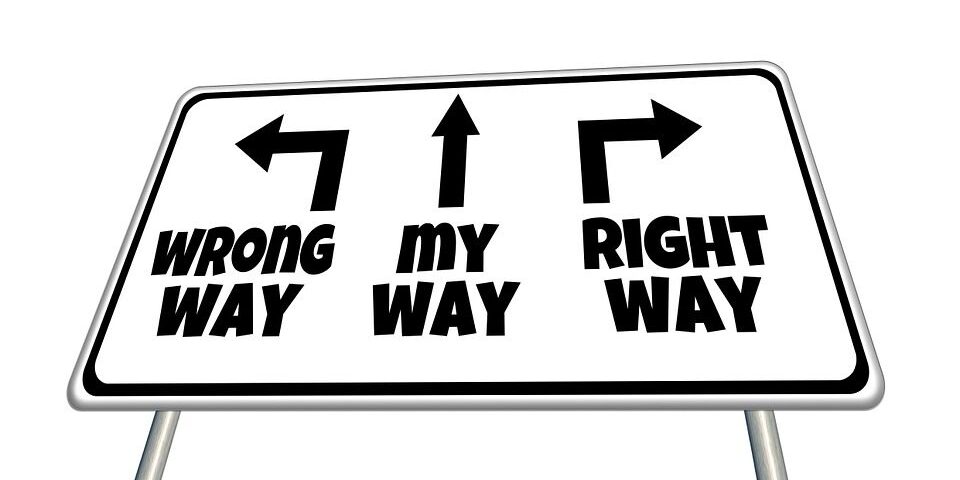
It’s tough having to be right, right? You have to always be alert, to step in, to cajole, correct, pick up the pieces… The demands are endless and the stress just keeps building. But what if we gave up having to be right? What would we lose? What would we gain?
Gains:
Yes, my experience may have led me to discover an approach that works. But is it the only right way? If we have discovered more than one way of cooking potatoes, perhaps there is more than one approach to most, if not all, other things in our life. Most of us enjoy potatoes as French fries, crisps, baked or mashed; in fact, ‘variety is the spice of life’. Indeed, if we only ever ate the potato in one style, we may soon lose the joy of the dish and the vegetable. So rather than staying alert to being right, be alert to what other ways you can experience as the right way. Add to your portfolio of skills.
Have you found being right isn’t always the same as being kind? You may begin with a good intention of wishing to help, but while being busy ‘being and getting it right’, the kindness is not so prominent. Kindness includes others while you’re doing the right thing. Including others, that is, enabling them to grow, helping them learn, and seeing the delight of getting it spot on – these all create a win-win effect for everyone.
Lose the pressure. Pressure from performing, of having to repeat a right or positive result. Lose the pressure and you’ll no longer have tunnel vision. You can make the time to see a bigger picture, and perhaps influence it to become even bigger for many others. Richard Branson, didn’t just want our train journeys to be better, but our flights too, and now he wants to make space travel possible for ‘Joe Bloggs’ too.
Learn the joys that come from being wrong. A detour, may just become an unexpected shortcut or a scenic journey. A new approach, experiment or entrepreneurial step may lead to unexpected results. Edison worked out a 1000 ways the light bulb wouldn’t work. And the most unexpected part is that you will lose your fear of loss or failure, because you are adding to your understanding.
Finally, when I no longer need to be right, I stop believing that when others don’t agree with me, when they have less information then I do, maybe they’re more ignorant or less smart than I am. Or, if they have the same information, but not the same answer, they’re foolish, unable to process information or are just idiots. Or I can even assume their motive is wrong, bad or evil. Sounds drastic? Bur when I’m stuck in being right, my assumption naturally is to believe the other person is more stuck in the wrong. The more ‘right’ I am, the more wrong they are.
So to catch yourself, and go from needing to be right to being your best, here is a simple question to realign yourself: would I rather be right or happy? Then set your course of action.